The Smart Home Security Gap: What McAfee Activation Covers and What It Doesn't When IoT Devices Are on Your Network
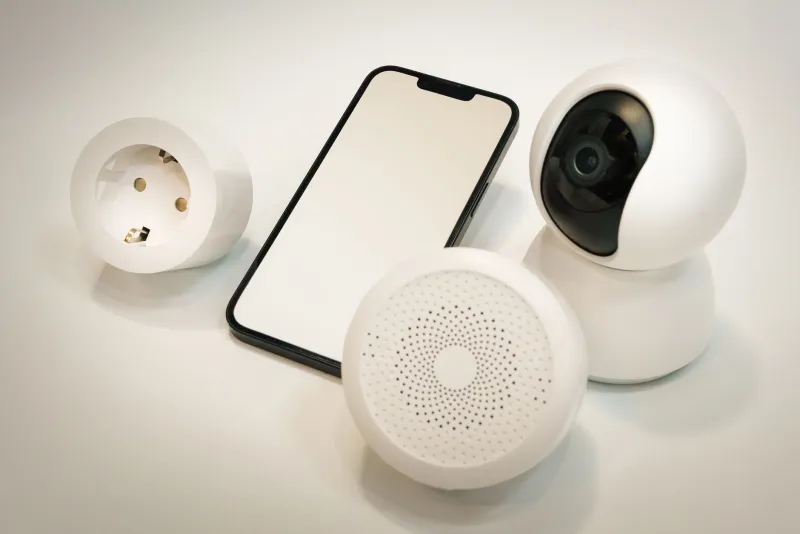
The average American household now contains somewhere between ten and twenty internet-connected devices. Laptops, smartphones, and tablets account for only a fraction of that number. The rest—smart speakers, video doorbells, connected thermostats, baby monitors, robotic vacuums, and streaming sticks—operate quietly in the background, exchanging data with servers around the world, often with little to no built-in security architecture.
When you complete your McAfee activation and install the software on your primary devices, you are making a meaningful and necessary investment in your digital safety. However, it is equally important to understand precisely what that protection covers—and where its boundaries lie. This guide is designed to help you map those boundaries and take practical steps to strengthen your entire home network, not just the devices where McAfee is installed.
What McAfee Activation Actually Protects
Once you activate McAfee on a supported device—whether that is a Windows PC, a Mac, an Android smartphone, or an iOS device—the software begins monitoring that device's activity in real time. It scans files, inspects downloads, flags suspicious websites, and watches for behavioral indicators of malware or phishing attempts. On devices where McAfee is installed and active, this coverage is comprehensive and continuously updated.
McAfee's suite also includes features such as a firewall, identity monitoring, and—depending on your subscription tier—a VPN service. These tools extend meaningful protection to the specific devices running the software.
The critical limitation: McAfee, like virtually all consumer antivirus solutions, cannot install an agent on your smart refrigerator, your Nest thermostat, or your Ring doorbell. These devices run proprietary firmware that does not support third-party security software. They connect to your home Wi-Fi network, send and receive data, and in many cases store sensitive information—but they do so entirely outside the protective perimeter that McAfee creates on your traditional computing devices.
Why IoT Devices Are a Genuine Attack Surface
Cybersecurity researchers have documented, repeatedly and consistently, that IoT devices represent one of the most exploited entry points for network intrusions in residential settings. The reasons are straightforward. Many smart home devices ship with default usernames and passwords that manufacturers publish openly in user manuals. Firmware update cycles are often slow, leaving known vulnerabilities unpatched for months. And because these devices are rarely monitored the way a computer is, compromised behavior can go undetected for extended periods.
A threat actor who gains access to a vulnerable smart camera or an unsecured smart plug does not necessarily stop there. In a flat home network—where all devices share the same Wi-Fi—lateral movement from an IoT device to a computer that holds financial records or personal documents is a well-documented attack technique. This is why completing your McAfee activation on your primary devices, while necessary, is not sufficient as a standalone strategy when your home network includes IoT hardware.
Network Segmentation: The Most Effective Complementary Defense
The single most impactful step you can take to protect your smart home ecosystem is to segment your network. Most modern routers—including those supplied by major American internet service providers such as Comcast Xfinity, AT&T, and Verizon—support the creation of a guest network or a secondary SSID.
By placing all IoT devices on a separate network that is isolated from the primary network where your computers and phones operate, you create a meaningful barrier. Even if a smart device on the guest network is compromised, an attacker cannot use it as a stepping stone to reach the laptop where McAfee is installed and actively monitoring for threats.
To implement this:
- Log in to your router's administration panel. This is typically accessed by entering your router's IP address—commonly 192.168.1.1 or 192.168.0.1—into a browser address bar.
- Locate the guest network settings. The exact menu path varies by router model, but most modern routers label this option clearly.
- Enable the guest network and assign a distinct password. Use a strong, unique password separate from your primary network credentials.
- Connect all smart home devices to the guest network. Reserve your primary network exclusively for computers, tablets, and phones running McAfee and other security software.
This single configuration change meaningfully reduces the blast radius of any IoT compromise on your property.
How McAfee's Activated Features Support Your Broader Network Strategy
While McAfee cannot install itself on IoT devices, several features available after activation contribute indirectly to smart home security.
McAfee's firewall, active on your computer after installation, monitors incoming and outgoing traffic and can flag unusual connection patterns. If an IoT device on your network attempts to communicate with your computer in an unexpected way, a properly configured firewall adds a layer of resistance.
McAfee's VPN, available in select subscription tiers, encrypts internet traffic from your activated devices. While this does not protect IoT devices directly, it ensures that data traveling from your computer—even on a network that includes potentially compromised smart devices—remains encrypted and harder to intercept.
Identity monitoring tools, included in McAfee+ plans, can alert you if personal data associated with your accounts appears in known data breaches. Given that many smart home devices are registered with email addresses and linked to payment methods, this monitoring adds a relevant layer of awareness.
Practical Steps to Take After McAfee Activation Is Complete
Once your McAfee software is activated and running, use the momentum of that setup process to address your broader home network security posture. The following steps are recommended for any household operating smart home devices:
- Change default credentials on every IoT device immediately. Do not leave factory-set usernames and passwords in place on any device connected to your network.
- Enable automatic firmware updates on all smart devices. Manufacturers periodically release patches for known vulnerabilities; automatic updates ensure you receive them without delay.
- Audit connected devices regularly. Log in to your router's device list and review what is connected. Unfamiliar devices warrant investigation.
- Disable features you do not use. Many smart devices enable remote access, Universal Plug and Play (UPnP), or cloud connectivity by default. If you do not use these features, disabling them reduces your exposure.
- Register your McAfee subscription and keep contact information current. If McAfee detects anomalous activity or if you need to recover your account, current registration details are essential for a fast response.
The Activation Foundation Matters More Than Most Users Realize
It may be tempting to view McAfee activation as a checkbox—something you complete once and then set aside. In reality, your activated McAfee subscription is the security anchor for your entire household's digital infrastructure. It is the device-level foundation upon which every other protective measure you implement rests.
A household that activates McAfee on its primary devices, segments its network to isolate IoT hardware, and follows basic smart device hygiene practices has constructed a layered defense that reflects how modern threats actually operate. No single solution eliminates all risk. But the combination of a properly activated McAfee installation and deliberate network architecture closes the most commonly exploited gaps in residential cybersecurity.
Your smart home is only as secure as its weakest connected point. Ensuring that McAfee is fully activated and configured on every supported device is the first and most important step toward making certain that weak point is not your front door.